
Stress - The Slow Thief of Health

Updated: Oct 20, 2025
How Modern Society Is Breaking Our Nervous Systems
We weren’t built for this lifestyle!
Not the pinging phones. Not the never-ending to-do lists. Not the pressure to always be productive, available, responsive, optimized, informed, and engaged. The modern world has become a non-stop assault on the human nervous system — and it’s taking a quiet, but deadly toll on our health.
It’s not one big, traumatic event doing the damage. It’s the hundreds of tiny ones - the micro-stressors. The death by a thousand cuts.
And here’s the real kicker: our nervous systems are exquisitely tuned, though just for a different world — a slower, simpler, pre-industrial world where stress had a beginning, a middle, and an end. Not this.
What’s happening to us, and why.....
Your Nervous System Is an Ancient Tool in a Modern Storm
Our nervous systems evolved to deal with very different kinds of threats than the ones we face today.
Imagine a hunter-gatherer encountering a lion. That’s an acute stressor. The body reacts immediately — adrenaline surges, the heart pounds, muscles tense, vision sharpens. It’s fight or flight. And once the lion is gone, the stress response shuts off. The body returns to baseline. Balance is restored. This “mobilize, then recover” cycle is what our nervous systems were designed for.
Now compare that to modern life:
You wake up to an alarm.
You check your phone — emails, news, texts, all waiting.
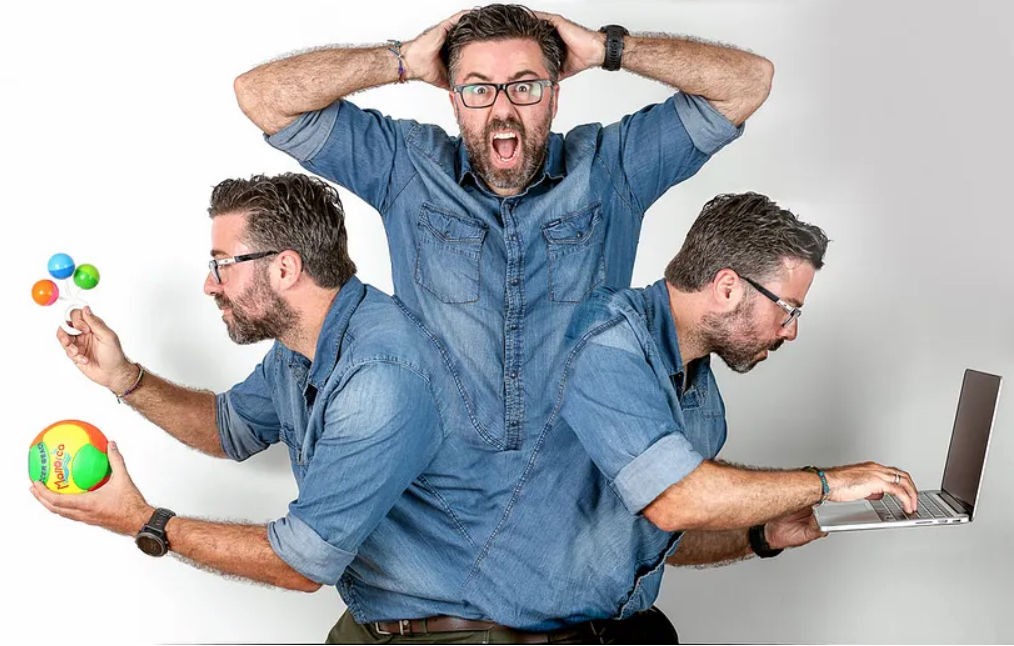
You rush through a processed/sugar breakfast, get the kids up & off to school, grab a coffee, commute in traffic, face deadlines, juggle meetings, respond to messages, squeeze in home/kids/family/pets admin & appointments, manage the emotional & mental load of daily family/collegues/friends/local & world events, doomscroll during breaks.
Then rush home for chores, cooking, homework/clubs etc., never getting ahead of the ever-increasing to-do lists.
Your brain stays in high alert mode all day long — with no lions, therefore, no actual fight or flight….no end point, no release, no recovery. And then one wonders why sleep is so hard!
The ways that our bodies rests & resets are reduced to a minimal time at the end of the day, if you are lucky. When do we have time to process our lives? And all the ways that make life worth living, or that keeps our bodies functioning effectively, and that keep us thriving - like movement, dance, exercise, community, healthy eating, sleep, creativity, hobbies, daylight, nature - all reduced to mini little timeslots.
This is chronic stress for our physiology, which it was not built for. According to WebMD and American Institute for Stress report 75-90% of doctor’s visits are for stress-related ailments & complaints. Is it any wonder that the US Surgeon General Dr V Murthy in 2024, called parental & caregiver stress, an urgent public health issue, not just for them, but a huge concern for child development & the next generation.
Murthy urged a fundamental cultural shift supported by system-level changes (such as paid family leave and mental health access) and individual "buffers" (including strong social connections, regular sleep, and physical activity).
Micro-Stressors: The New Predator
Unlike the immediate threat of a wild animal, today’s stressors are constant, many low-level, and often psychological, some longer ongoing societal “norms”: From a passive-aggressive email, to a calendar full of overlapping Zoom meetings, endless headlines about global catastrophes (compassion fatigue) and the pressure to keep up with everyone’s curated life on social media.
Biological stressors - toxins, plastics, noise, pesticides, pollutants, processed foods, sugar, alcohol, caffeine, nicotine, bright lights, strong smells, sitting still too long, nature deficit disorder due to increased urbanization.
Cognitive stressors - ongoing mental load, decision making, time pressure, multitasking, too many notifications/interruptions, being put on the spot
Emotional stressors - intense surprise, disappointment, anxiety, comparing to others, jealousy, fear of judgement or retribution, embarrassment, moving house/job/relationships.
Social stressors - confrontation, group work, peer pressure, compliance to social norms, public speaking, relationship friction due to lack of family support & urbanization leading to larger diverse communities. Increased loneliness and isolation. Raised parenting expectations/helicopter parenting. Hobbies & sports being competitive, ambitious & physically stressful from a young age, no longer for pure enjoyment.
Economic stressors - stagnant wages, increased living expenses, housing & educational costs.
Societal/Environmental stressors - blurred work/life balance, social media, excessive screen-time leading to altering dopamine pathways & disrupting sleep. Irregular accepted work breaks, like lunch, bio, maternity leave, mourning/funerals, evenings, weekends - the expectation is to be always available.
Individually, these seem trivial. But they accumulate. Your body responds to each one as if it matters — because your nervous system can’t always tell the difference between a lion and a late rent payment.
This leads to a constant state of low-grade fight-or-flight, which never fully turns off.
And that’s the problem.
How Chronic Stress Is Quietly Killing Us
When stress becomes chronic, the body gets stuck out of homeostasis; our body is in a state of "dis-ease". The systems designed to protect us — the very systems that once helped us survive — now begins to harm us.
The effects of this “dis-ease” in the body are widespread, on a cellular level:
Cortisol Overload leads to belly fat, high blood pressure, insulin resistance & diabetes.
Immune Function drops, increasing vulnerability to illness & increased inflammation
Sleep Quality & Quantity plummets, impairing memory, mood, and metabolism.
Mental Health deteriorates memory & cognition as well as rising rates of anxiety, depression, panic attacks and burnout.
Joints & Muscular Tension aches & pains, inflammation, lower bone density, sore shoulder/neck muscles, clenched jaw/TMJ/teeth grinding, headaches
Digestive Issues flare up as stress suppresses gut function, decreased nutrient absorption, reduced metabolism & enzymatic output, inflammation, elevated insulin production (leading to diabetes, damaged arteries & obesity), reflux, IBS, allergies,
Heart Disease and Stroke risk increase due to inflammation and hypertension.
Skin Problems acne, eczema, psoriasis, skin rashes
Reproduction & Hormone decreases testosterone and estradiol, leading to reduced fertility, dampening of libido and erectile function, reduced muscular mass & strength.
The body in chronic stress is a body in slow decline. And because we’re so used to it — we are so used to being compliant and overriding our body’s signals, we don’t even notice it anymore. It’s just “normal.” We are totally operating from our cognitive minds, without a care for our body’s needs and wisdom.
What’s Changed Since the Pre-Industrial Revolution?
Before the Industrial Revolution, daily life involved:
Natural light and circadian rhythms
Physical labor interspersed with rest
Time in nature
Tight-knit communities, real human connection & support
Clear boundaries between work and rest
A slower, seasonal pace of life
Less comparison or concern outside your small community
Stress existed, but it was intermittent and resolvable (or death!). You worked hard, but you also had moments of true stillness — sitting by a fire, walking through fields, watching the sky, communing with nature/animals, friends & family.
Today, we’ve lost most of those built-in buffers. The pace has accelerated. The expectations have exploded. And the pause button is gone.
Our nervous systems are running on overdrive without ever downshifting into recovery. And we're seeing the consequences everywhere — in our health stats, our relationships, our sleep, and our sense of purpose.
Reclaiming Your Nervous System in a World That Won’t Slow Down
"Resilience is not a trait - it's a state. And the key to that state is restoration."
"Resilience emerges when the systems of the body and brain have enough energy and safety to function in balance. Homeostatic balance is primarily disrupted by stressors. To bring resilience back, we don’t push harder. We don’t force compliance. We reduce the stress load, restore balance, and reawaken the systems that fuel healing, learning, and growth." - by Dr Stuart Shanker, Self-Reg
The world isn’t going to get less intense anytime soon. So we have to learn to build nervous system resilience — to navigate stress, we need to consciously protect and regulate, by creating time slow down & use effective tools in these moments of downtime.
Here’s how:
1. Practice intentional stillness - Take 5-10 minutes a day to be completely still. No screens. No noise. Just you and your breath. This signals safety to your nervous system.
2. Turn off non-essential notifications - Every ding is a micro-stressor. Reclaim your attention.
3. Move your body gently - Walking, stretching, yoga — these signal to your body that it’s safe, helping to down-regulate the stress response.
4. Sleep like it matters - No screen time 60 minutes before bed. Get sunlight during the day. Your nervous system does most of its repair work while you sleep.
5. Breathe deeply, often - Slow, diaphragmatic breathing is a cheat code for calming your system. Try 3-part belly breathing, or the 4-7-8 breath. It works.
6. Reduce Toxins - food, buy in season, organic, local (think of anything with labels as warnings, rather than ingredients). Eat home cooked, reduce plastics & chemicals from soaps, detergents, laundry, hair-care & cleaning products. Ditch air fresheners & artificial fragrances. Non-toxic cookware. Swap dryer sheets for laundry balls. Remove plastic water bottles.
7. Rebuild real-world rituals - Cook a meal from scratch. Talk to a neighbor. Watch the sunset. These may seem small — but they create moments of calm & connection in a fast-paced world.
Final Thought: The World Isn’t the Problem. Our Pace Is.
Modern life has given us extraordinary tools, health, access, and opportunity — but it’s also placed demands on our nervous systems that they were never designed to handle.
Your nervous system is doing its best to keep you safe in a world that feels constantly unsafe — and it’s exhausting.
So the goal isn’t to escape modern life. The goal is to live within it on your own terms, with practices that protect your inner pace in a world that never stops.
Allow your body remember how to feel safe and how to heal. You just have to give it the space to remember.
Blessings x
Jess

Comments